


Three NSW closing dates in one week? Check each page first
A volunteer committee found three NSW rounds landing in one week. Opening each program page on NSW.gov.au changed the plan and halved the workload.
← All insights · By Helm Intelligence · 26 September 2026 · Tips
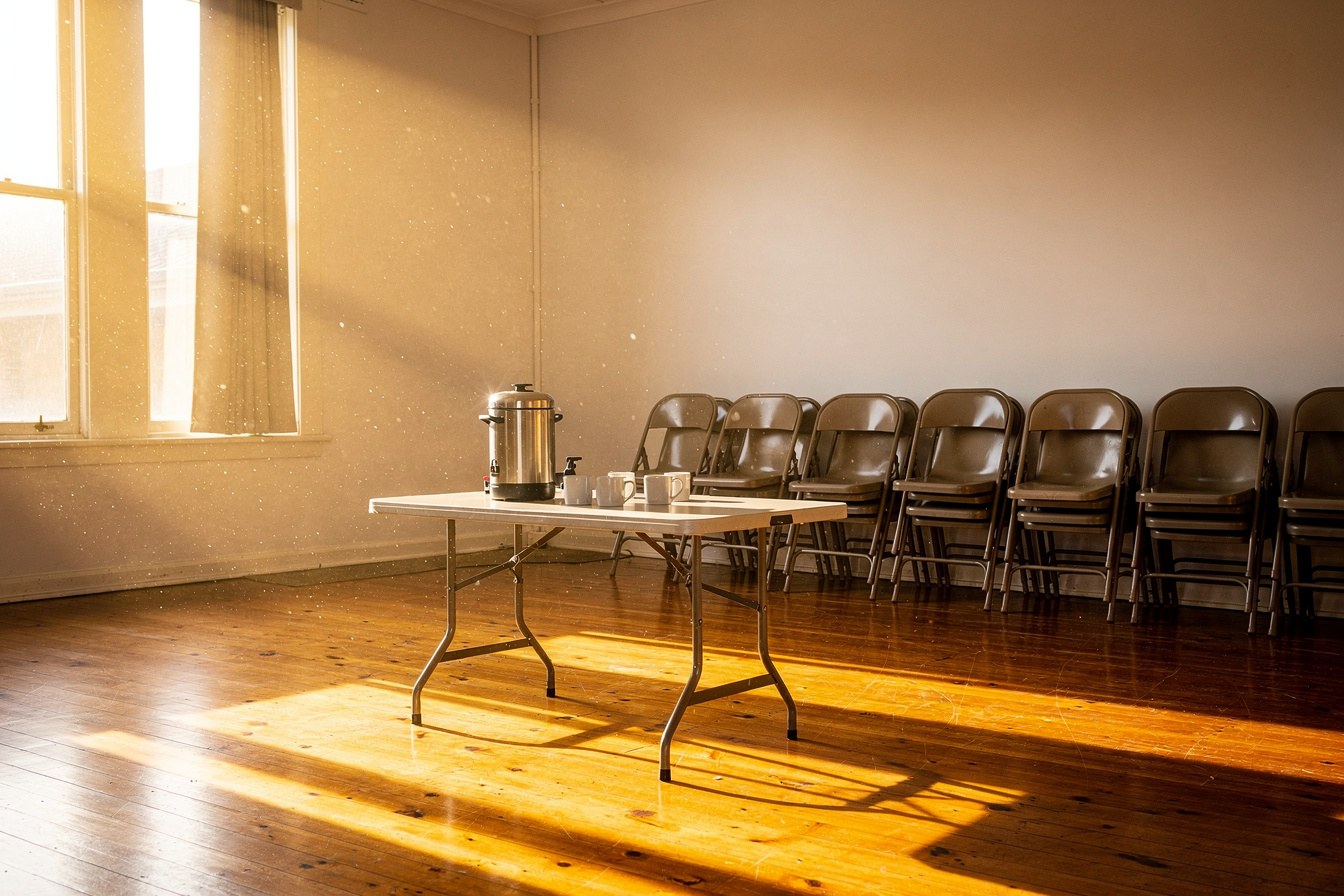
Helm Grants Insights6 articlesA volunteer committee met in a hall west of Parramatta on a Tuesday night. Seven people, two laptops, a tin of biscuits and a list of NSW rounds someone had copied out of an email chain. Three of them looked like they closed within days of each other.
The room talked itself into a sprint. Split into three teams, one submission each, everything away by Friday. Somebody volunteered to take Thursday off work.
Then the treasurer did the boring thing. She opened each program's own page on NSW.gov.au, one at a time, and read the dates off the page instead of off the list.
The picture changed. One window had already gone. Another sat further out than the list suggested, which meant there was room to write it properly rather than at midnight. A third page turned out to be a prior year's round with a title almost identical to the current one, and both were sitting live on the site at the same time. And the link that had been circulating alongside one of the programs was not that program's page at all. It resolved to a general grants and funding search surface with no sign of the round on it.
Same evening, same seven people, a different decision. Two submissions instead of three. Both evidenced. Both finished in daylight.
A clustered list is usually an artefact of the list
Nobody in that email chain was lying. Lists get built by copying a title and a date out of a newsletter, a Facebook group, a peak body bulletin, or a well-meaning council officer's update. Each copy is accurate on the day it is made. None of them update when the source page does.
So a list is a photograph, and a program page is the weather. Opening dates get amended. Closing times get extended, sometimes quietly. A round is marked closed on its own page while the copied title keeps circulating for another fortnight.
Here is the part that catches experienced committees as often as new ones. Even inside NSW.gov.au, two pages about the same round can disagree. We have seen a grants listing and a ministerial release announcing the same round give different opening dates while agreeing on the closing time. That is not a scandal. It is normal in a site that publishes announcements and program listings through different processes. It is also a good reason to treat the program's own listing as the page that governs your calendar, and to treat everything else as a pointer to it.
Four checks, in order, before you split the volunteers
This is the sequence the treasurer worked through, written out properly. It takes about fifteen minutes per round and it routinely saves a weekend.
- Verify the closing time on the program's own page on NSW.gov.au, not on the list that brought you there. Read the time as well as the date. A 4pm cut-off is not the same as end of day, and it is almost always the clock in the portal that decides, not the clock on your laptop.
- Check whether you are reading the current round or last year's. Near-identical titles from different years can both be live on NSW.gov.au at once, one closed and one open. Look for the financial year in the page title, the status marker, and the dates in the body. If two pages look the same, they are two pages.
- Confirm which agency administers it. The NSW.gov.au listing is the shop window. Intake usually runs in the administering agency's own application portal, which means a separate registration, a separate login, and a separate set of forms. The upside nobody mentions: several NSW agencies run intake on the same underlying application platform, so an account you create for one round is often the account you use for the next one. Create it early, not at 3pm on closing day.
- Then commit your volunteer hours to the one or two submissions you can genuinely evidence. Evidence means the letter of support you can actually get, the participant numbers you can actually count, the photos and attendance sheets that already exist. Not the ones you intend to gather.
That last check is the one committees skip, and it is the one that matters most.
What chasing every window actually costs
Here is what actually happens when a small organisation goes after three rounds at once. Three applications get written to about sixty per cent. The strongest one gets the least attention because the person carrying it is also proofreading the other two. Nobody has time to write the project rationale properly, so each application leans on the same paragraph of good intentions.
Then nothing is retained. No clean project description, no costed budget, no saved answers to the questions that recur round after round. Next year the committee starts from a blank page again, and someone says out loud that grants are not worth the paperwork.
Two submissions, properly evidenced, leave you with material. The budget spreadsheet survives. The outcomes paragraph gets reused. The insurance certificate and the governing documents end up in a folder somebody can find. A committee that finishes two applications in daylight comes back next round. A committee that finishes three at midnight usually does not.
There is a related trap worth naming. Some rounds say plainly in their own text that a particular kind of organisation cannot apply, or that an application without a co-contribution is unlikely to be funded. That text is not fine print. It is the round telling you where not to spend your Saturday. Read the exclusions before the objectives, not after.
Doing the triage before you sit down

That triage is the part Helm Grants does before your committee opens a laptop. Federal, Queensland, Brisbane and NSW Government rounds arrive in one feed, scored against what your organisation actually does with every point itemised, with opening and closing dates tracked and reminders at 7, 3 and 1 days before a round closes. Where a round's own text plainly excludes your type of organisation, it scores low and says why, so nobody burns a weekend on it. Helm Grants never asserts eligibility and never submits anything for you. You decide what to apply for and you own every draft. If a round is not listed, paste it in and it becomes a full workspace with the same scoring and the same reminders.
You can do all four checks by hand. Plenty of good committees do. The question is whether you want to do them on a Tuesday night with two laptops, or have them done before the meeting starts.
See the grant rounds that fit your organisation at https://helmgrants.com.au/?utm_source=web&utm_medium=insights&utm_campaign=helm-grants
One more thing for the volunteers in that hall. Pick the round you keep meaning to prepare for properly and put it in next month's agenda, not this month's sprint. Write the project description while nothing is closing. That is the only version of grant writing that gets easier over time.
Questions this raises
Sources
- NSW.gov.au grants and funding listing (community safety stream)
- NSW.gov.au grants and funding listing (current-year multicultural projects round)
- NSW.gov.au grants and funding listing (prior-year round with a near-identical title)
- NSW.gov.au grants and funding listing (community road safety round)
- NSW.gov.au emergency financial support page that resolves to a general search surface
- NSW.gov.au ministerial release announcing a community safety round
Join the conversation on LinkedIn →

#NSW grants#community organisations#grant deadlines#volunteer committees#grant applications