
Quick Response Grants for regional Queensland artists: October 2026
October's Quick Response Grant round closes at 11:59pm on 31 October. What it funds, who runs it, and three checks to make before you apply.
← All insights · By Helm Intelligence · 27 October 2026 · Rounds
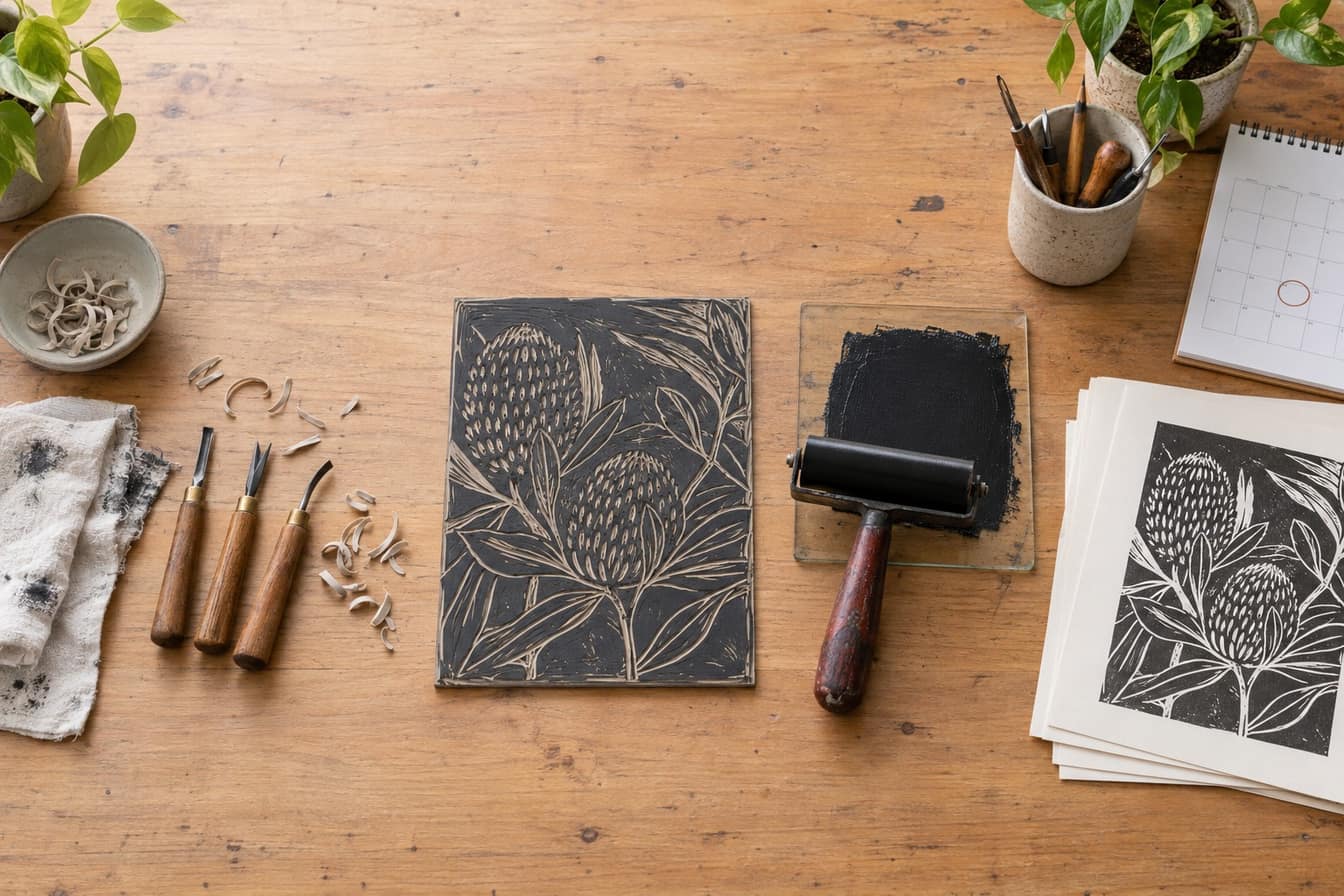
The invitation arrived in the second week of October. A visiting artist would run a week-long printmaking workshop in early December, and a printmaker living a few hours inland had been offered a place. The workshop fee and the travel added up to real money.
She's a composite, drawn from conversations we keep having with regional artists, but her situation is common. She has never applied for a grant, and she has the two doubts we hear most. Is it worth the paperwork for a few thousand dollars? And by the time she finds a round worth applying for, won't it already have closed?
For a project her size, both doubts have short answers. Both answers come from the Quick Response Grant.
What a Quick Response Grant is, and who runs it
Quick Response Grants are part of the Regional Arts Fund. The fund is an Australian Government initiative, not a Queensland Government program. Regional Arts Australia manages it nationally, and Flying Arts Alliance runs it in Queensland. If you're in Queensland, your application goes to Flying Arts Alliance.
Regional Arts Australia says Quick Response Grants are for immediate or short-notice opportunities. They're smaller than the fund's Project Grants, and they cover professional development. Flying Arts Alliance puts it more practically: the grants suit small projects or professional development when other funding timelines don't fit.
The timeline is what makes this round useful. Plenty of arts funding runs once or twice a year. When an opportunity arrives in October and starts in December, a round that closed in March can't help you.
The amounts are modest. Individuals can ask for up to $3,000 and organisations for up to $5,000. Flying Arts Alliance and Regional Arts Australia publish the same figures.
The October 2026 dates
Quick Response Grants run in monthly rounds from February to November, and each round closes on the last day of the month. Regional Arts Australia says outcomes come back within about five business days.
Flying Arts Alliance has published these dates for October 2026:
- Opens: 1 October at 9:00am
- Closes: 31 October at 11:59pm
- Outcomes advised: by 6 November at 5:00pm
- Project start window: between 14 November and 23 January
The start window is the date people get wrong. A workshop in early December fits. A project starting before 14 November doesn't, even though outcomes are advised by 6 November, because the start window doesn't open until 14 November. A project starting in March belongs in a later round.
If October doesn't fit, November is the last monthly round of the year. Check its dates and start window on the Flying Arts Alliance page before you plan around it.
Why it suits a first application
The Quick Response Grant is for immediate or short-notice opportunities. The way it works also makes it a sensible place to learn.
The amount is small, so you don't have much riding on it. The wait is short, so you find out within days whether your application landed, not months later. And there's a deadline every month from February to November, so missing one doesn't cost you the year.
Which ABN goes where, what an auspice organisation is, whether an old grant report is still outstanding. It's cheaper to learn those things on a $3,000 application than on a bigger one with a longer wait.
Three checks before you write a word

Flying Arts Alliance's How to Apply page lists the requirements. Three of them can rule an application out before you start writing.
- Location. Applicants must be based in an MMM2 to MMM7 Queensland location. Don't guess. Look your address up on the Health Workforce Locator, the tool Flying Arts Alliance tells you to use. Regional Arts Australia also points applicants to its Regional Arts Fund Eligibility Map.
- ABN and structure. Individuals need an ABN in their own name and must be Australian citizens or permanent residents. Organisations must be incorporated with an ABN. If they aren't, Flying Arts Alliance's How to Apply page says they can use an auspice organisation that manages the grant.
- History. Any earlier Regional Arts Fund reports must be complete, and you can't be awarded the same funding stream twice in one financial year.
If your address sits outside MMM2 to MMM7, or your project isn't an arts project, this round isn't for you. That includes small businesses and not-for-profits whose work isn't arts. This round won't stretch to fit them.
One caution. If you're not sure which round you're looking at, contact Flying Arts Alliance before 31 October.
From invitation to submitted
The printmaker's to-do list before 31 October is short. She looks up her address on the Health Workforce Locator. She checks that her ABN is in her own name. She gets the workshop fee and travel costs in writing so her budget is based on real figures. She writes a plain account of what she'll do in that week and what she'll bring back to her practice. Then she submits well before 11:59pm on 31 October, not at 11:50pm with an unsaved draft.
She could track all of that with a calendar note, a checklist and a document. Or she could paste the round into Helm Grants, which turns it into a full workspace. Helm Grants scores the round against her practice with every point itemised, and if the round's own text plainly excludes what she does, it scores the round low and tells her why. It tracks the closing date and reminds her 7, 3 and 1 days before 31 October. Its AI drafts under cite-or-confirm rules, so anything it can't source is marked for her to check. Helm Grants never submits an application or predicts funding. She reviews, owns and lodges every word.
See the grant rounds that fit your organisation at https://helmgrants.com.au/?utm_source=web&utm_medium=insights&utm_campaign=helm-grants
Questions this raises
Sources
Join the conversation on LinkedIn →

#Regional Arts Fund#Quick Response Grants#Queensland arts#Flying Arts Alliance#First grant application