

Parramatta's $3,000 grant: a sensible first application
City of Parramatta's Small Grants Fund is capped at $3,000 and assessed quarterly. Nothing on the page favours first-timers, and that is fine.
← All insights · By Helm Intelligence · 21 September 2026, updated 23 September 2026 · Rounds
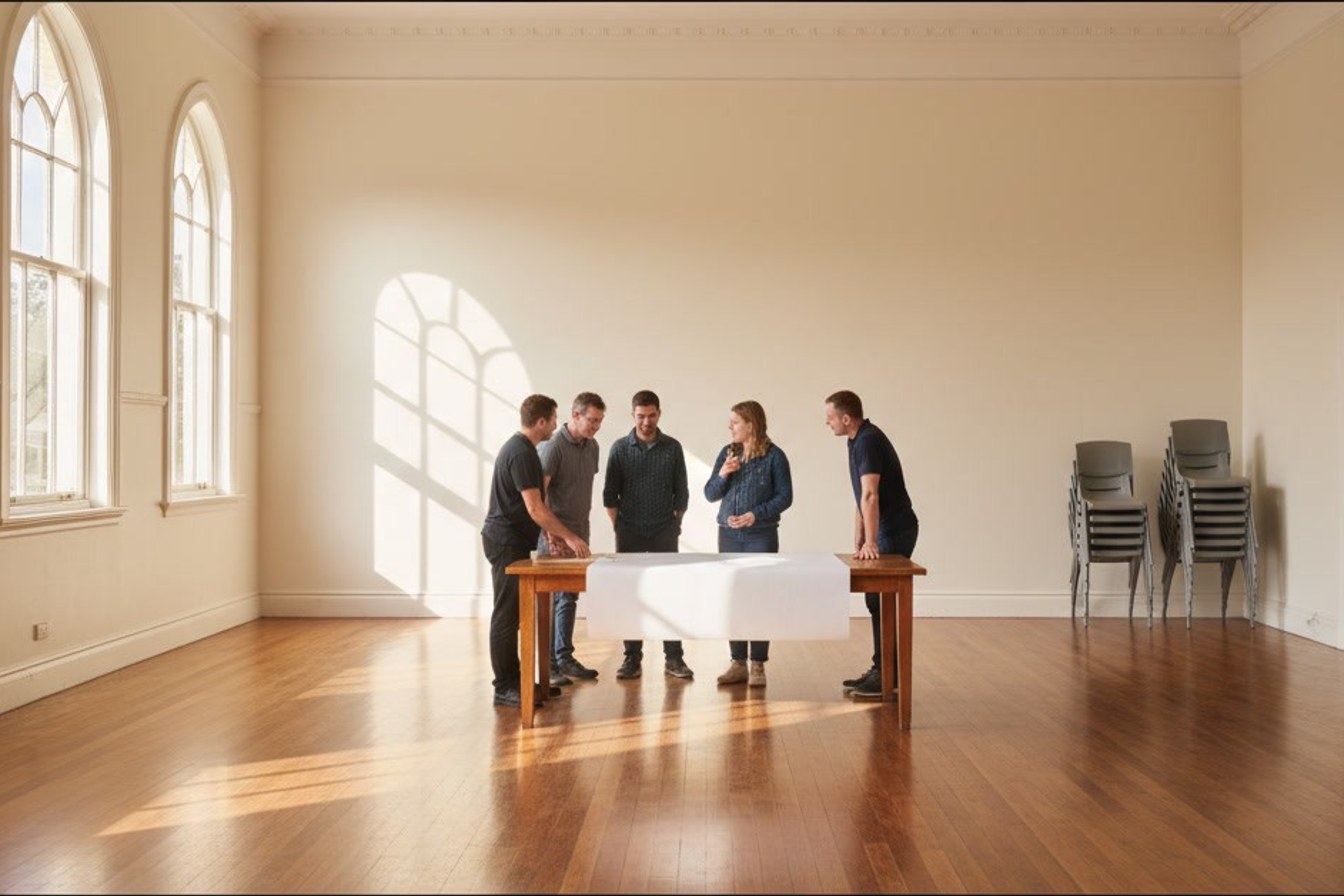
Helm Grants Insights3 articlesPicture a volunteer committee in Parramatta. Five people, a hired hall on a Tuesday night, and a plan for a weekend program that gets older residents out of their flats one afternoon a week. Nobody on that committee has ever written a grant application. Someone says the council one is the friendly one, the one that gives new groups a leg up.
That is the moment worth stopping at, because the comfortable idea is wrong.
City of Parramatta's Small Grants Fund page says nothing about first-time applicants. Neither does the Community Grants Program page. No priority, no set-aside, no softer assessment for groups that have never applied before. If someone has told you councils go easy on newcomers, they have not read the pages.
What is actually true is more useful, and less flattering.
The pages say nothing about first-timers, and that matters
Grant folklore travels fast in community organisations. New groups get told that assessors make allowances, that the small council round is a warm-up, that the scoring is kinder if you have never been funded before.
Read the City of Parramatta material and there is no such provision. The Small Grants Fund page sets out who can apply and what the money is for. The Community Grants Program page sets out the larger annual streams. Neither creates a category for new applicants, and neither says an experienced organisation gets marked harder.
So the honest pitch for starting with a small council round is not preference. It is proportion.
What the Small Grants Fund actually says
The mechanics are published, and they are refreshingly short.
- The maximum is $3,000 per organisation per financial year.
- Only one application per organisation is funded, no matter how many you lodge.
- Applications are open year round and assessed on a quarterly cycle.
- The published cut-off dates for 2026 to 2027 are 1 September 2026, 2 November 2026, 1 February 2027 and 26 April 2027.
- The stream is written for voluntary or staffed not-for-profit incorporated organisations located in the Parramatta local government area, proposing a discrete activity that addresses a social, economic or environmental need.
As at the time of writing, the next live cut-off is 2 November 2026. The September date has passed.
Read that eligibility line twice, because it does most of the work. Incorporated, not-for-profit, located in the Parramatta LGA. If your group is a handful of neighbours with a good idea and no incorporation, this stream is not written for you as it stands. A sole trader running a workshop business is not who this fund describes either.
Working that out in five minutes beats spending a weekend on a draft that was never going to land. That is not discouragement. It is the single most valuable thing an inexperienced applicant can learn early, and most people learn it the expensive way.
Secondary summaries of the fund, including a write-up on fundsforngos.org, mention two further points: that an auspice arrangement with an incorporated group may be acceptable, and that an outstanding acquittal from earlier council funding may block a new application. Neither is confirmed here against the current guidelines document, so treat both as questions to ask rather than rules to rely on. The council's own guidelines govern. Download them from the Small Grants Fund page and check before you plan around either point.
Why small and quarterly beats big and annual for a first attempt
Hold the Small Grants Fund against the larger streams on the same Community Grants Program. There is a capacity building stream at $15,000 and a social enterprise stream at $25,000. Those run on a single annual window, and the window for the 2027 project year closed on 7 September 2026.
That is the whole argument in one comparison.
At $3,000, the paperwork is proportionate to the money. Councils do not ask for a three-year strategic plan to support a modest one-off activity. You describe the activity, you budget it, you say who benefits, you commit to acquitting it.
At $3,000 on a quarterly cycle, a miss in November is not a lost year. It is roughly twelve weeks until the next cut-off, with your draft already written, your budget already built and the assessor's feedback still fresh. Get your first attempt wrong on an annual stream and you wait a full year to try again, by which time the committee has changed, the idea has drifted and the momentum is gone.
Repetition is what turns a first application into a skill. Annual rounds do not give you repetition. Quarterly ones do.
The skills a $3,000 application teaches you
The mechanics you practise on a small council round are the same ones the bigger rounds test. Three in particular.
Describing one discrete activity instead of a vague program. "A weekly Saturday afternoon social session for residents over 65 at the Community Centre, running twelve weeks from February" is assessable. "Improving social connection for seniors" is not. The Small Grants Fund asks for a discrete activity, and the discipline of writing one sentence that a stranger can picture carries into every application you ever write.
Building a budget that matches the activity line by line. Hall hire, catering, a facilitator, printing. Every line should trace back to something in your activity description, and every line in your activity description should have a cost or a clear note that it is donated. Assessors read the two side by side. So should you, before you submit.
Thinking about the acquittal before you spend a cent. You will have to report on what the money did. Decide now who keeps the receipts, who counts the attendance, who writes the final report. Groups that plan the acquittal at the start find the second application far easier than groups that discover the requirement six months later.
None of this is exotic. It is the ordinary craft of applying, and a small round is a cheap place to learn it.
Before you write anything, open the current guidelines on the City of Parramatta website and read them end to end. Guidelines change between rounds. A page like this one tells you how to think about the round. The council's document tells you the rules.
Finding the next round without living in the tabs
Here is the practical problem with learning on small rounds: they are small, they are scattered, and nobody sends you a note when the next one opens.
Helm Grants brings federal, Queensland, Brisbane and NSW Government grant rounds into one feed and scores each one against your organisation, with every point itemised so you can see why it scored the way it did. Where a round's own published text plainly excludes your type of organisation, it scores the round low and tells you which line did it, so you do not spend a weekend on a draft that was never written for you. It tracks opening and closing dates and reminds you 7, 3 and 1 days out. If a round you have found is not listed, paste it in and it becomes a full workspace with the same scoring and the same reminders. The AI drafts under cite-or-confirm rules, so anything it cannot source is marked for you to confirm. It never decides eligibility for you, and it never submits anything on your behalf. You review and own every word.
See the grant rounds that fit your organisation at https://helmgrants.com.au/?utm_source=web&utm_medium=insights&utm_campaign=helm-grants
If you run a small organisation, the useful question is not whether the council will go easy on you. It will not. The question is which round is small enough, and repeats often enough, for you to get good at this before the money gets serious.
Questions this raises
Sources
Join the conversation on LinkedIn →

#council grants#not-for-profits#NSW grants#Parramatta#first grant application#grant writing