


Australia Post Community Grants: two questions before you write
Australia Post's Community Grants are for incorporated not-for-profits, with no auspice. Two questions tell you whether to start writing.
← All insights · By Helm Intelligence · 13 November 2026 · Eligibility
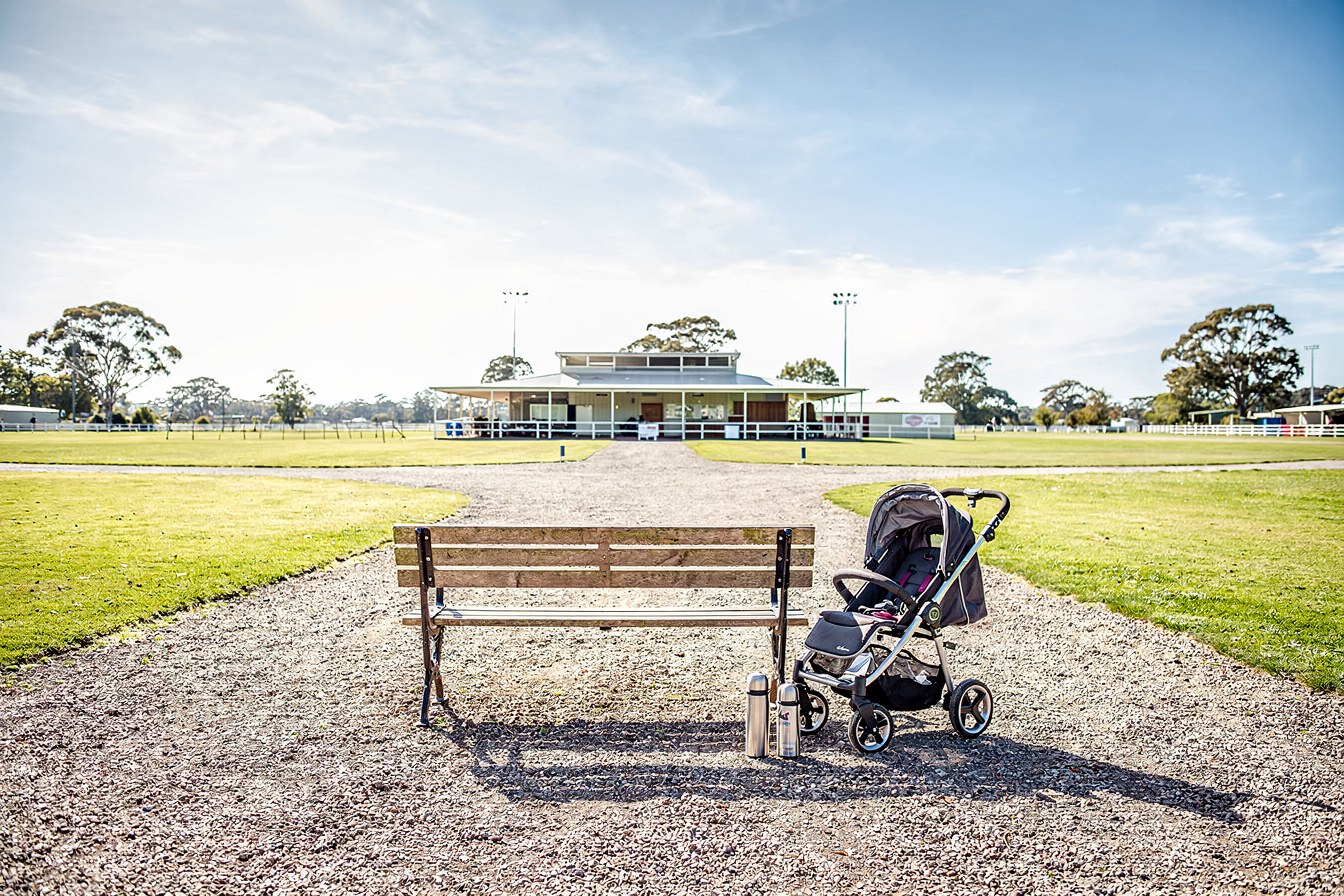
A walking group for new parents does one loop of the showgrounds every Thursday. On paper, it doesn't exist.
This is a composite of a conversation we hear often. A volunteer coordinator in a regional town runs the group. There's a thermos, a loop past the pavilion and, say, twenty people who would otherwise spend the morning at home alone with a baby. The group has no constitution and no ABN of its own. For years the local neighbourhood centre has let it sit under its name for small things: a hall booking, a flyer, the odd insurance question.
The coordinator sees Australia Post's Community Grants, reads that grants go up to $10,000 per project and opens a blank document that night. The project matches the program's purpose almost word for word. The group's structure doesn't, and no amount of drafting will change that.
Before anyone writes an application, Australia Post's guideline wording has already decided who can apply. Two questions settle it.
What Australia Post's wording requires
Australia Post's Community Grants Program page says the program backs projects that connect people to improve mental wellbeing locally. As reported by Northern Grampians Shire Council, projects have to be locally led and locally delivered. Grants go up to $10,000 per project.
Northern Grampians Shire Council states the rules on who can apply. Applicants must be an incorporated not-for-profit, and Australia Post doesn't accept auspice arrangements. Regional Development Australia Yorke and Mid North names incorporated not-for-profits as the applicant type for the 2026 round.
No auspice means no partner can lend you its incorporation. The neighbourhood centre that has carried the walking group for years can't carry it here.
Question one: is your group an incorporated not-for-profit?

This is the question people skip, and it's the harder one to fix quickly. It has two parts.
First, is the group itself incorporated and not-for-profit? Not the organisation that hosts you, not the church whose hall you meet in, not the council that funds your other program. The group whose name goes on the application.
Second, does the ABN record show that status? Northern Grampians Shire Council adds three practical conditions:
- The ABN record must show incorporated not-for-profit status.
- The group needs an Australian bank account that matches the ABN.
- The group must operate within Australia.
A group that has banked through its host organisation, or through a treasurer's personal account, has a mismatch before it writes a word.
Look up your ABN on the Australian Business Register, read what the record says about your entity type, then hold it next to the name on your bank statement.
Question two: is mental wellbeing the main purpose?
Northern Grampians Shire Council sums up the 2026 guidelines as three tests a project must meet:
- Its primary purpose is better mental health and wellbeing.
- It builds real local connection.
- It is locally led and delivered.
"Primary purpose" is the phrase doing the work. A community garden, a sports carnival or a skills workshop can each be about wellbeing. Or it can be about something else, with wellbeing as a welcome side effect. The test asks whether wellbeing through local connection is the reason the project exists. Our own rule of thumb, not one Australia Post publishes: if you have to argue your way to it in the second paragraph, you have your answer.
The walking group passes this one easily. New parents, isolation, a weekly routine, run by locals for locals. That's why the coordinator started drafting. It's also why the first question hurts.
If either answer is no
Then the fix is structural, not written. There are two real options:
- Incorporate the group, get an ABN record that shows its not-for-profit status and a bank account that matches it, then apply to a future round.
- Take this project to a program whose published criteria fit what your group is today.
A better application won't work. A stronger impact story, a sharper budget or a glowing letter of support won't turn an unincorporated group into an incorporated one.
Incorporation means a committee decision, a constitution and a round of paperwork, and the ABN record has to catch up afterwards. That's the reason to start well before a round opens, not in the week it does.
If you run a small business or trade as a sole trader, this program isn't written for you. A sole-trader ABN isn't an incorporated not-for-profit, and a for-profit business running a wellbeing initiative isn't the applicant Australia Post describes. Some rounds are written for businesses. This isn't one of them.
Dates, and what to do now
The 2026 round closed on 6 July 2026, and Regional Development Australia Yorke and Mid North confirms the same date. If Australia Post opens another round, check its program page first.
For a group like the walking group, now is the time to:
- Look up the ABN on the Australian Business Register and read what it says.
- Check that the bank account name matches the ABN.
- Decide as a committee whether to incorporate, or where else the project belongs.
- Write one sentence on how the project's main purpose is mental wellbeing through local connection. If it won't fit in one sentence, rework the project before the pitch.
Guideline wording can change between rounds, so if another round opens, read its guidelines in full before you rely on any of this.
You can run those two questions by hand on every round that lands in the committee's inbox. Or, if Australia Post opens another round, paste it into Helm Grants as your own round. It becomes a full workspace, scored against your organisation with every point itemised. Where the round's own text plainly excludes your type of organisation, Helm Grants scores it low and tells you why, before anyone gives up a weekend to writing. It tracks the closing date and reminds you 7, 3 and 1 days out. It also brings federal, Queensland, Brisbane and NSW Government rounds into one feed, so a project that doesn't suit this program has somewhere else to be matched. Helm Grants doesn't decide whether you can apply and never submits anything. That call, and every word of the application, stay with you.
See the grant rounds that fit your organisation at https://helmgrants.com.au/?utm_source=web&utm_medium=insights&utm_campaign=helm-grants
Questions this raises
Sources
Join the conversation on LinkedIn →


#Community grants#Not-for-profit#Australia Post#Mental wellbeing#Incorporation